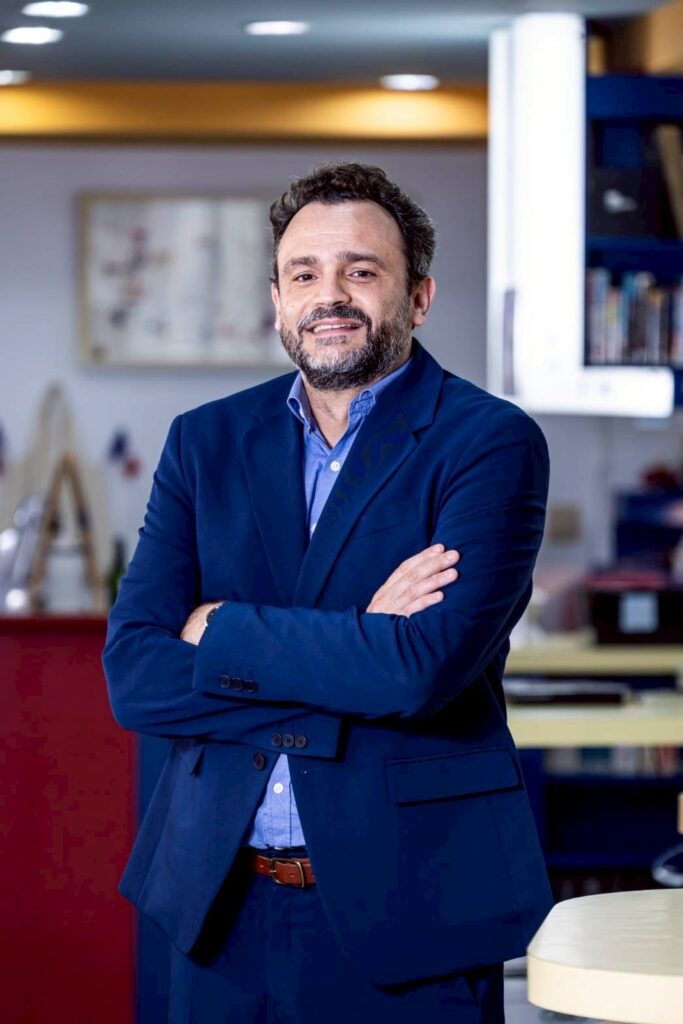

法國文化協會 博達安 Julien Dal Bosco
在本集《藝起過生活》專訪中,我們非常榮幸邀請到 法國文化協會台北分會(Alliance Française de Taïwan)主任 Julien Dal Bosco 先生。
法國文化協會台北分會自 1984 年成立以來,隸屬於 1883 年於巴黎創立的全球法國文化協會網絡,該組織遍及全球 135 個國家、超過 800 個分會。作為一個 非營利、非政府組織,法國文化協會致力於 推廣法語教育,並促進 跨文化的理解與交流。
Julien Dal Bosco 先生長期投身文化推廣與國際教育合作,擁有豐富的國際經驗與深厚的文化視野。我們非常榮幸能邀請他與我們分享對 語言、文化與藝術交流 的獨到見解。
Q1. You’ve worked in different countries during your career. Could you share one overseas experience that left the strongest impression on you? 您曾在不同國家工作過,能與我們分享一個您最印象深刻的海外經驗嗎?
It’s hard to choose, because each country has had a very strong impact on me — obviously, a very good impact.
I’ve been in India, in Ghana, in South Africa, and my latest post was in Namibia. Namibia is actually the total opposite of what Taiwan is, because it’s one of the least populated countries in the world, whereas here the population is very dense.
But every country has truly shaped me in different ways.
When it comes to art, India has a specific place in my heart, because I discovered a lot of different artists there. The art scene in India was very dense, whether it was contemporary art, traditional art, or even music. It has a very long history and tradition — art, culture, and life are deeply bound and beautifully mixed together.
Ghana was also very interesting, as I was in a very traditional region — the Ashanti region, which is the land of the king, the ancient region. I really experienced traditional art, dance, and ancestral customs there. It was fascinating to be immersed in such a rooted and traditional way of life.
South Africa was equally memorable. I was there in 2002, during the post-apartheid era, when there was so much hope and energy. The art scene reflected that new sense of possibility — it was vibrant, dynamic, and full of creative expression. It was a truly inspiring time to be in South Africa, right after Nelson Mandela became the first democratically elected president.
So many experiences — I feel very lucky to have lived and worked in such diverse cultural contexts, each leaving a lasting imprint on me.
每個國家都對我產生了深刻而正面的影響。我曾在印度、迦納、南非工作,最近的一個任期則是在納米比亞。納米比亞其實與台灣截然不同——那是世界上人口最稀少的國家之一,而台灣的人口則極為密集。每個國家都以不同的方式深深塑造了我。
談到藝術,印度在我心中佔有特別的位置。那裡讓我發現了許多極具魅力的藝術家。印度的藝術場景非常豐富,無論是當代藝術、傳統藝術,甚至音樂,都令人印象深刻。這個國家擁有悠久的歷史與傳統,藝術、文化與生活緊密交織在一起,令人著迷。
迦納同樣充滿魅力。我當時待在一個非常傳統的地區——阿散蒂地區,那裡是古代國王的領地。我親身體驗了當地的傳統藝術、舞蹈與祖先儀式。能夠深入接觸這樣一種深深根植於傳統的生活方式,對我而言極具吸引力。
南非的經驗也令人難忘。我在 2002 年曾在那裡工作,正值後種族隔離時期,整個社會瀰漫著希望與活力。藝術界充分反映了這股新的能量——充滿生氣、動感與創造力。能夠在納爾遜·曼德拉成為南非首位民選總統後的年代工作,對我來說是極具啟發性、令人振奮的經歷。
這些經驗數不勝數,我感到非常幸運,能夠在如此多元的文化環境中生活與工作。每個地方都在我心中留下了深刻的印記。

圖:Mr. Dal Bosco 於 YellowKorner Awards 攝影大賽入圍作品展覽開幕致詞
Q2. You’ve been living in Taiwan for about a year now. In terms of lifestyle—such as work rhythm, social life, food, or daily habits—what differences strike you the most compared to France? 您在台灣已經一年,您覺得在工作節奏、社交、飲食或日常習慣,哪些地方與法國差異最大?
I think if you ask any foreigner who has been here for some time—what comes first is people, people, people. I truly believe it’s not a stereotype to say that Taiwanese people are very friendly. I also really like the Taiwanese sense of humor. It’s something I discovered when I first arrived here—the approach to life that is both joyful and warm-hearted.
In spite of all the challenges Taiwan faces, whether it’s typhoons, earthquakes, or anything else, people always keep a smile and a good sense of humor. That’s a big difference compared to France. In France, even though we have many happy things, we sometimes tend to complain—especially in Paris. (I’m from Paris, so I can say that!)
Everything here feels quite different. The work rhythm, for instance, is faster than in France. I’ve also noticed that social life works differently. The frequency of how people meet here is often higher—you might just say, “Let’s have a bubble tea” or “Let’s grab a coffee,” and you meet for a short while. Whereas in France, when we say “Let’s meet,” it usually means a three-hour dinner! I like that here in Taiwan, you meet more often, even if it’s just for a quick moment.
And of course, we have to talk about food—you can’t talk about Taiwan without mentioning food! Taiwanese food is amazing, and there’s so much to discover. What I really like is that people here eat out a lot. We think we eat out often in France, but actually, it’s nothing compared to Taiwanese people.
Taiwan is also a true crossroads of Asian cuisine—you can taste all kinds of food from around the region. It’s funny, because when I lived in France, people often confused Taiwan with Thailand and thought our food was too spicy! But in Taiwan, you can travel across Asia without taking a plane—Japanese food, Korean food, Thai food—you can find it all here.
Another thing I love about Taiwan is that nature is never too far away. Especially in Taipei, when you need some fresh air or greenery, it’s so easy to take the metro and escape for a day or two. You’re really lucky here—people are very busy, but when they need a breath of fresh air, they just hop on a bike, and within an hour they can be somewhere peaceful and rural, surrounded by nature. I do that very often myself.
如果問任何在台灣生活過一段時間的外國人,第一個印象絕對是——人。我真心相信,說台灣人友善絕不是刻板印象。我特別喜歡台灣人的幽默感,那是我初到台灣時最深的感受之一,一種既快樂又溫暖的生活態度。即使台灣面臨各種挑戰,像是颱風、地震或其他突發狀況,人們總是能以笑容和幽默面對。這和法國的情況很不一樣。在法國,即使我們擁有許多美好的事物,人們有時還是容易抱怨——尤其是在巴黎。(我來自巴黎,所以我可以這麼說)
這裡的一切都與法國截然不同。例如工作節奏,比法國快上許多。我也注意到社交方式有很大差異——台灣人見面的頻率更高。常常只是說「去喝杯珍奶」或「喝杯咖啡」,就能在短時間內見上一面。而在法國,當我們說「我們見個面」,通常意味著要共度一場長達三小時的晚餐!我非常喜歡在台灣這種「短而頻繁」的相聚方式,即使只是短暫片刻,也能增進彼此交流。
當然,談到台灣就不能不提食物——台灣的美食實在令人驚艷,永遠吃不膩。我特別喜歡台灣人經常外出用餐的習慣。我們常以為法國人也愛外食,但其實和台灣相比,還差得遠呢。台灣更像是亞洲美食的十字路口——在這裡可以品嚐到各地風味。很有趣的是,我在法國時,常有人把「台灣」和「泰國」搞混,覺得我們的食物一定很辣!但在台灣,你根本不用搭飛機就能「環遊亞洲」——日本料理、韓國料理、泰國料理,應有盡有。
我還特別喜歡台灣的一點是:自然永遠不會離你太遠。
尤其是在台北,當你想要呼吸新鮮空氣、看看綠意,只要搭上捷運,就能暫時逃離城市。台灣人雖然忙碌,但只要想放鬆,就能騎上車,一個小時內就抵達寧靜的鄉村,被大自然包圍。

Q3. Alliance Française de Taiwan has been very active in promoting French language learning. How is the experience of studying French with the Alliance different from learning at a regular language school? 法國文化協會(Alliance Française)致力於推廣法語學習,與一般語言學校相比,在法協學習法語會有什麼不同的體驗呢?
As you mentioned, the Alliance Française has been in Taiwan for almost 41 years now. We’re based in Taipei, but we also have a center in Kaohsiung — so two locations across the island. We’re very well established, with a long history and experience in teaching French, and we really understand how to teach French to Taiwanese learners.
Obviously, coming to the Alliance Française is a very different experience from going to a regular language school. When you come to the Alliance, you learn French the French way. Our pedagogy is always up to date — we continuously refresh our teaching methods because we are part of a large international network. As you mentioned, there are over 800 Alliances Françaises around the world, and we maintain a strong connection with the Alliance Française in France, especially in Paris. That’s what gives us our unique position — we’re part of an international community dedicated to promoting the French language and culture.
Our motto is “Learn French, live the culture.” It means that we go beyond traditional classes — it’s not just about learning grammar or vocabulary, but about immersing yourself in French culture. You don’t only learn the language; you also discover French culture through films, exhibitions, concerts, and many other cultural events that bring the language to life.
We also try to provide authentic and engaging contexts for learning. For example, we organize ateliers — workshops — where you can learn how to taste wine, explore French gastronomy, or discover different aspects of French lifestyle and culture.
We really try to make learning French a relaxing and enjoyable experience, and I think our students appreciate that. In fact, we have many very loyal students — some of them have been studying with us for over ten years! For many, it becomes more than just a class; it’s a hobby and a community. They come to the Alliance Française just as others might go to the gym — to learn, to enjoy themselves, and to socialize.
正如你所說,法國文化協會(Alliance Française)在台灣已經深耕近 41 年。我們在台北設有總部,在高雄也有分館,遍布全台兩個據點。多年來累積了豐富的教學經驗,對於如何引導台灣學生學習法語非常熟悉。
在 Alliance Française 學法語與一般語言學校的體驗截然不同。在這裡,你學到的是「最道地的法國式法語」。我們的教學方法始終與時俱進,因為我們隸屬於一個龐大的國際網絡。正如你提到的,全球共有超過 800 個法協據點,而我們與法國本部——尤其是巴黎的 Alliance Française——保持密切聯繫。這讓我們擁有獨特的地位:成為國際社群的一部分,致力於推廣法語與法國文化。
我們的座右銘是:「Learn French, live the culture」——學法語,也融入法國文化。
這意味著我們不僅教授文法與單字,更帶領學生親身體驗法國的生活方式。
在這裡,你不只是學語言,而是透過電影、展覽、音樂會及各種文化活動,感受語言背後的文化魅力,讓學習變得更生動、更有連結。
我們也努力營造真實又有趣的學習情境。例如,我們會舉辦各種 atelier(工作坊),讓學生學習品酒、法式料理,或探索法國生活文化的不同面向。
我們希望學法語的過程是輕鬆愉快的,而學生們也非常享受這樣的氛圍。
我們有許多長期學員——有些甚至持續學習超過十年!對他們來說,這不只是上課,而是一種生活方式與興趣所在。來到 Alliance Française,就像有人固定去健身房一樣——學習、享受、也在這裡與朋友交流。

Q4. In your view, how are language learning and cultural experience connected? 您認為語言學習與文化體驗之間有什麼連結呢?
Yeah — “Learn the language, live the culture.”
Because I really, deeply believe that when you learn a language, you also learn the way people think. And I think this applies very well to French. By learning the language, you start to understand how people interact, how they express themselves, and how they see the world.
Let me give you an example that just came to my mind — the expression “I miss you.”
In French, we don’t say I miss you literally. We say “Tu me manques,” which actually means “You are missed to me.” So in French, the other person comes first, while in English the focus is on I, on how I feel. It’s a small difference, but it says a lot about how French people think and relate to others.
Another good example is “s’il vous plaît,” which literally means “if it pleases you.” It shows a sense of politeness that centers on the other person — it’s a very cultural way of expressing respect. Maybe that’s also why, as people often say, French men are seen as polite and charming! But truly, it’s part of the culture and how the language reflects consideration for others.
Language really tells you about people — about how they think, how they behave, and what they value. You can’t learn French without also learning its cultural references, values, and traditions — how we live, what we do, and even how we see relationships.
And when we talk about learning French, it’s not just about France itself, but also about the francophone world — all the countries where French is spoken. That’s something we really emphasize at the Alliance Française. Through our classes, workshops, and cultural activities, we help students discover not only the French language, but also the diversity and richness of la francophonie.
「學語言,也生活於文化。」我深信,學習一種語言的同時,也是在學習一種思維方式。這點在法語上尤其明顯。透過語言的學習,你會開始理解人們如何互動、如何表達自己,以及他們看待世界的角度。
舉個例子——英文裡說「I miss you(我想你)」,而法語則說「Tu me manques」,字面意思是「你對我而言是缺席的」。換句話說,法語先放「你」,而英文強調「我」。這樣細微的差異,正體現出法國人在情感與人際關係上的思維方式。
再例如「s’il vous plaît」,字面翻譯是「如果您願意」。這不只是請求的表達,而是一種以對方為中心的禮貌——一種文化性的尊重與體貼。也許這也解釋了為什麼人們常說法國人,尤其是法國男性,特別有禮貌、富有魅力。因為語言本身就反映出這種文化特質與對他人的關懷。
語言能揭示一個民族的思考模式、行為方式與價值觀。學法語,不能只學語言本身,還要理解它背後的文化脈絡、價值觀與傳統——那包含我們的生活方式、行為習慣,以及對人際關係的看法。
此外,學法語也不僅僅是學「法國的法語」。它還代表整個「法語世界」——所有以法語為文化語言的國家與地區。這也是我們在法國文化協會特別強調的重點。透過課程、工作坊與各種文化活動,我們希望帶領學生探索法語及法語圈的多樣性與豐富性,真正體驗「語言即文化」的精神。

Q5. Beyond language courses, Alliance Française de Taiwan also organizes cultural activities. Could you share some examples with us? 除了語言課程之外,法國文化協會也舉辦各種文化活動。您能與我們分享一些例子嗎?
Yes, we organize many different kinds of events at the Alliance Française.
Some are what we call our major events — such as concerts and conferences. For instance, we recently organized a piano recital in Taipei with the renowned French pianist and conductor David Krausheimer. Events like this are a wonderful way to bring our community together — our members, students, and also anyone who simply wants to share an artistic experience with us.
We also host talks and conferences, such as the recent one featuring a French journalist specializing in Taiwan and geopolitics, who gave a fascinating talk about Taiwanese identity. Those are our larger events, but we also organize more casual and interactive ones.
For example, our Kaohsiung center regularly holds cuisine workshops for both kids and adults. And in Taipei, we’re planning to launch several new workshops before the end of the year — including one on macarons, which I think everyone is excited about!
We’re also preparing a cheese-tasting workshop, as well as end-of-year events — such as gatherings for our alumni and a Christmas party for current students. So there’s always something happening at the Alliance Française, whether you’re learning French or just want to enjoy a taste of French culture.
As for upcoming events, our next one will be in early November, since October is quite a busy period for us with exams and new registrations. But yes — do stay tuned, we’ll be announcing our macaron workshop very soon!
法國文化協會全年舉辦各式各樣的活動,從大型的音樂會、講座,到輕鬆的工作坊應有盡有。
例如,我們最近在台北舉辦了一場由法國知名鋼琴家兼指揮 David Krausheimer 帶來的鋼琴音樂會,現場氣氛熱烈。這類活動不僅讓會員與學生聚在一起,也歡迎所有熱愛藝術與文化的朋友共襄盛舉。
此外,我們也定期舉辦講座與座談會。像是前陣子邀請了一位專研台灣與地緣政治的法國記者,深入探討台灣身份議題,內容精彩又發人深省。
除了這些大型活動之外,我們也規劃了更多輕鬆互動的體驗課程。例如高雄分館長期開設親子與成人料理工作坊,而台北分館則預計在年底前推出幾個全新課程,其中包括最受期待的 馬卡龍工作坊,歡迎大家持續鎖定最新消息。
我們還安排了 起司品鑑工作坊 以及年度重頭戲,如 校友聚會 和 學生聖誕派對。無論你是法語學習者,或單純想體驗法式生活風情,法國文化協會都有活動等你參加。

圖: 2025 David Krausheimer 鋼琴音樂會
Q6. I understand you also have a passion for collecting art. Could you tell us about one piece in your collection that carries the most memorable story for you? 您也熱衷於收藏藝術品,能與我們分享您的收藏中讓你印象深刻的一件作品和背後的故事嗎?
For me, collecting art is a way to remember the countries I’ve lived in. A piece of art is always more than just a visual creation; it’s a way to recall the people I’ve met and the artists I’ve worked with in the different Alliances Françaises where I’ve served over the years.
If I had to choose one part of my collection to talk about, I would definitely mention Indian tribal art. I was in the heart of India about ten years ago, in the state of Madhya Pradesh — it’s a federal state, right in the center of the country, and it’s also the heartland of tribal art. It’s where the Gond people live, especially around Bhopal, the capital of Madhya Pradesh.
During my time there, I collected several beautiful pieces from Gond artists. I also have some works representing another form of Indian tribal art — Warli art, which comes from the Mumbai region. I bought a few Warli pieces when I traveled there, and together they remind me not only of the art itself but also of the people, their stories, and the incredible creativity rooted in their traditions.
Another thing that has deeply inspired me throughout my postings is my interest in rock art. I’ve become completely fascinated by prehistoric artistic expressions, especially those I encountered in South Africa and Namibia.
In Namibia, for example, we organized a life-size photographic exhibition that recreated the atmosphere of a rock art cave — almost like stepping into a prehistoric site. We worked with a scientist who explained the process: how people in ancient times would draw on the walls, what pigments they used, and how they made their paints from natural materials. It was truly fascinating — a powerful connection between art, history, and humanity.
對我來說,收藏藝術是一種紀念自己曾居住過的國家的方式。藝術品不僅是視覺創作,更承載著回憶——回憶我遇過的人,以及在不同法國文化協會工作期間接觸過的藝術家。
如果要分享一件收藏,我一定會提到 印度部落藝術。大約十年前,我在印度中部的中央邦(Madhya Pradesh),這裡是部落藝術的核心地帶,尤其是在首府 Bhopal 附近,居住著 Gond 部落的人們。在那裡,我收藏了許多 Gond 藝術家的作品。
除此之外,我還收藏了另一種印度部落藝術——來自孟買地區的 Warli 藝術,這些都是我旅行時購入的。這些作品不僅讓我想起藝術本身,也喚起我對創作者、他們的故事,以及深植於傳統之中的驚人創意的回憶。
此外,我在各個工作崗位上對 岩石藝術 也產生了濃厚的興趣。我對史前藝術的表現形式完全著迷,特別是在南非與納米比亞看到的那些作品。例如在納米比亞,我們舉辦過一場實體大小的攝影展,重現岩洞藝術的氛圍——彷彿走入史前遺址。我們還邀請了科學家解說古人如何在洞壁作畫、使用何種顏料,以及如何以天然材料製作顏料。這樣的經驗非常吸引人,它讓我感受到藝術、歷史與人類之間深刻而強烈的連結。

圖:Warli Art 是一種源自於印度馬哈拉施特拉邦的古老部落傳統藝術形式,以其簡潔的幾何圖形(如圓形、三角形和方形)描繪生活、大自然和儀式。
Q7. Looking at YellowKorner’s collection, is there a particular piece or series that resonates with you personally? Why does it speak to you? 在 YellowKorner 的作品中,有沒有哪件作品或系列特別讓您有共鳴呢?
Obviously, when you enter YellowKorner, I really recommend your listeners—if they haven’t come yet—to come visit the gallery.Because, first of all, what I can say about your place is diversity. It’s a very diverse space where you can find many amazing photographic pieces.
If I have to choose two, I would definitely first pick your Swimming Pool series by Marina Vernicos.What I love about this series is that the photos are taken from a drone.It’s a view from above—looking down on swimming pools and people just standing or lounging by the water, having the laziest time of their lives.
The colors are amazing, and what’s also beautiful is the strong sense of symmetry, which creates a very peaceful feeling when you really take time to observe the photographs.
Why do I like this series?
To me—it’s very personal—but it reminds me of David Hockney, the British painter who now lives in Normandy, France. It connects to his Swimming Pool series, especially the works he created while living in California.
If I’m not wrong, that’s where he painted one of his most famous pieces, A Bigger Splash.
Now, the other work from YellowKorner that I would pick is a more personal photograph — The Kissing Nuns (Toscani 1) by Oliviero Toscani, from the 1992 Benetton advertising campaign. It’s a very famous series. It speaks to me deeply because I was a teenager when it was released. That Benetton campaign was a shock at the time — it dealt with controversial issues, but also celebrated diversity.It was one of the first fashion campaigns to feature people of different backgrounds. Society was still very closed back then, so it really stood out to me.
這個空間最令人印象深刻的特色就是 「多樣性」。這是一個極具多元性的場域,你可以看到許多令人驚豔的攝影作品。
如果要我挑選兩件最喜歡的作品,我首先會選 Marina Vernicos 的《Swimming Pool》系列。我特別喜歡這個系列,是因為作品採用無人機高空俯瞰拍攝,視角獨特,能從上方看到泳池與池邊的人們——他們或站或躺,享受人生中最悠閒的時光。
色彩絢麗,而強烈的對稱感又營造出一種寧靜與和諧的氛圍,當你細細觀賞時,會感受到一種內心的安定。
為什麼我對這系列特別有感?對我而言,它有一種非常個人的連結——讓我想起英國畫家 David Hockney。他現在住在法國諾曼第,而這個系列讓我聯想到他在加州時期創作的著名《Swimming Pool》系列,尤其是代表作《A Bigger Splash(更大的浪花)》。
至於另一件我想推薦的作品,則更為個人化——那就是 Oliviero Toscani 的《The Kissing Nuns(接吻的修女)》(Toscani 1),出自他 1992 年為 Benetton 拍攝的廣告系列。這組照片非常知名,對我有深刻共鳴,因為發表時我還是青少年。當時的 Benetton 廣告引起極大震撼——它勇於探討爭議議題,同時讚頌多元與包容。這是首批以不同背景、種族的人為主角的時尚廣告之一。在那個社會仍相對封閉的年代,這樣的作品尤其令人印象深刻,也深深影響了我對藝術與社會議題的認識。

圖:YellowKorner 簽約作品 Oliviero Toscani – Toscani1
Q8. With such a busy professional life, how do you personally maintain balance and nurture your creativity? 在忙碌的工作中,您是如何維持生活的平衡並培養自己的創造力的呢?
For me, it’s really about personal balance.I mean, there’s no life without art — there’s no way I could lead a balanced life without having an intense artistic life.
I love attending exhibitions, especially here in Taipei. I’m very happy to be posted here because every weekend there’s always an option for an exhibition — there’s no way you could just stay at home and not have something to see. I specifically remember, I think it was at the end of last year, I saw the Yayoi Kusama exhibition — that was amazing.And next month, I’m really looking forward to Art Taipei, for example, to get an overview of galleries around the region.
What also drives me is cinema. I studied cinema when I was in France, and I’m really passionate about movies — I try to keep up with new releases. The latest movie I really enjoyed was The Room Next Door by Spanish director Pedro Almodóvar.
So yes, that’s really part of my personal balance.
對我來說,一切都圍繞著「生活的平衡」。我相信沒有藝術就沒有生活——如果沒有深度參與藝術,我的生活就無法保持平衡。
我非常喜歡參觀展覽,尤其是在台北。能被派駐在這裡讓我很開心,因為幾乎每個週末都有展覽可看——根本沒有理由待在家裡,總有值得去看的東西。去年我看了草間彌生的展覽,印象非常深刻。我也很期待即將到來的台北藝術博覽會,那會是了解整個亞洲藝廊生態的絕佳機會。
另一個讓我充滿熱情的領域是電影。我在法國時主修電影,非常熱愛這門藝術,也會盡量追看新片。最近我特別喜歡的一部,是西班牙導演阿莫多瓦(Pedro Almodóvar)的《隔壁的房間》(The Room Next Door)。
藝術與電影,對我來說,是維持生活平衡不可或缺的一部分。

圖: Yellowkorner 簽約作品 Marina Vernicos – Sharing The Sun
Q9. Finally, what are your hopes for the future of cultural exchange between Taiwan and France? 您對未來台灣與法國之間的文化交流有什麼期望呢?
Alliance Française is here to foster cultural dialogues between France and other countries.
What we need to do is stick to our mission: to strengthen cultural exchange between Taiwan and France, and also to create more opportunities for collaboration between the two countries.
For example, this can involve facilitating young Taiwanese people to go to France. For that, we have a partnership with the French Bureau, which helps students or young professionals explore France and discover new perspectives in their own fields.
But what also motivates us is to develop joint projects with Taiwanese authorities, such as La Fête de la Musique, or the Francophone Festival that we organize.We are increasingly focusing on collaborations with Taiwanese institutions to bring new artistic programs to Taiwan and foster a deeper, more dynamic cultural exchange between France and Taiwan.
法國文化協會(Alliance Française)致力於促進法國與世界各國之間的文化對話。我們的核心使命是強化 台灣與法國之間的文化交流,並創造更多雙邊合作的機會。我們也積極協助台灣年輕人前往法國探索各種可能。為此,我們與 法國在台協會(French Bureau) 合作,幫助學生與年輕專業人士拓展視野,在各自領域中獲得新的觀點與靈感。
同時,我們持續與台灣官方單位合作,推動各類文化專案,例如 音樂節(La Fête de la Musique) 與 法語文化節(Francophone Festival)。
我們也越來越重視與台灣各機構的協作,透過引進嶄新的藝術計畫,讓法國與台灣之間的文化交流更加深入、活潑而富有生命力。